
Content marketing is evolving quickly, thanks to AI-powered tools that help businesses create, manage, and improve content. More companies are adopting AI to speed up their content process, and this trend is growing fast.
Research shows that more than 65% of marketing teams already use AI in some way, and the number continues to rise. Generative AI is not just making content creation quicker it’s transforming how businesses approach marketing.
As generative AI evolves, content creators must adapt or lag behind competitors leveraging AI. In content marketing, AI is now essential for staying competitive, increasing output, and personalizing messaging.
Recent statistics show Generative AI for Content Creation is growing in impact:
- 80% of marketers say Generative AI has helped them create content faster.
- Over 60% of businesses already use AI for content marketing.
This article will walk you through practical ways to integrate generative AI into your content strategy, ensuring you stay ahead in a competitive market.
Understanding the Landscape: Generative AI for Content Creation
What is Generative AI for content creation?
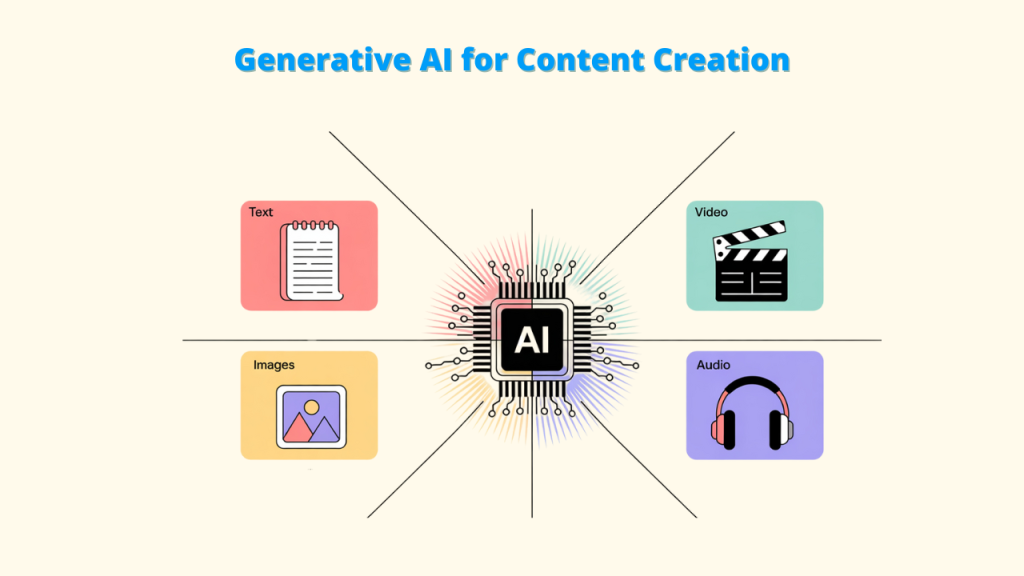
Generative AI refers to artificial intelligence systems that can create new content across various formats based on the data they’ve been trained on. In content marketing, this translates to tools that can generate:
- Text: Articles, social posts, product descriptions, and more
- Images: Custom illustrations, product visualizations, and branded graphics
- Video: Animations, tutorials, short-form content
- Audio: Podcasts, voice-overs, music, and sound effects
Popular tools and platforms overview for Generative AI for Content Creation
The rise of generative AI has led to many advanced tools, including platforms like AI Collective, DALLE, and Midjourney, as well as specialized content creation tools like Jasper and Copy.ai. Each tool has unique features designed for different content needs.
- AI Collective: A powerful generative AI platform that provides access to multiple AI models, helping with tasks like writing, image creation, coding, and data analysis.
- DALL·E: An AI tool that generates images from text descriptions, making it easy to create unique visuals.
- Midjourney: A creative tool that turns text prompts into artistic images, offering a unique way to design visual content.
- Jasper: An AI writing assistant that helps generate content for blogs, social media, and more.
These tools are shaping the future of content creation, making it easier and faster to produce high-quality material.
Current Trends of Generative AI for Content Creation
AI is changing how content teams work, with three key trends shaping the industry:
A. Personalized Content at Scale: AI makes it possible to produce content that is specifically suited for a variety of audience segments, which raises engagement.
B. Automating Repetitive Tasks: AI takes care of tasks like data analysis and content scheduling, making workflows more efficient.
C. Rapid Ideation and Prototyping: Generative AI speeds up the brainstorming process, enabling the production of prototypes and content ideas more quickly. The AI Collective Tool, for example, has a massive searchable prompt library.
Potential Risks to Be Aware Of
While generative AI has many benefits, it also has some risks:
- Inaccurate Information: AI can sometimes create false or misleading content, known as “AI hallucination.”
- Risk of Plagiarism: AI might unintentionally produce content that is too similar to existing work.
To avoid these issues, it’s important to have strong quality control measures in place.
The Current State of Generative AI in Content Creation
Top AI platforms like AI Collective, Claude, Midjourney, DALL·E, Jasper, and Copy.ai have made big advancements in generating text, images, and videos. However, they still struggle with understanding context and creativity. The demand for AI in content creation is growing, with major investments driving its development.
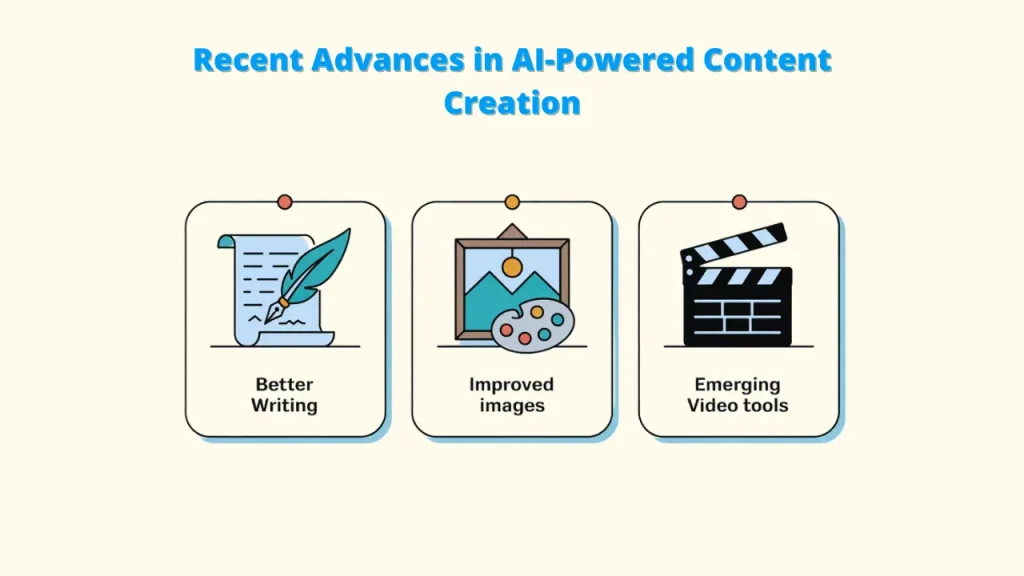
Recent improvements have enhanced AI capabilities:
- Better Writing: Generative AI now creates longer, more accurate, and well-structured content.
- Improved Images: AI-generated visuals are more consistent and aligned with brand needs.
- Emerging Video Tools: AI is beginning to offer basic video animation features.
The market is responding to this growth, with over $2 billion invested in AI content technology last year alone, showing strong industry confidence.
Why Strategic AI Implementation Matters
Implementing generative AI strategically rather than haphazardly delivers several competitive advantages:
☑️ Faster Content Production: AI speeds up content creation, with teams seeing a 3-5x increase in output. AI Collective helps streamline workflows by combining multiple AI tools in one place.
☑️ Stay Ahead of Competitors: Brands that start using generative AI early gain an advantage, making it harder for others to catch up.
☑️ Save Money & Increase Profits: AI helps cut content creation costs by 30-50%, leading to better returns on investment.
☑️ Tailored Content for Audiences: AI studies data to create content that suits different audience needs.
☑️ Better Content Strategy: AI gives valuable insights to improve content and make it more effective over time.
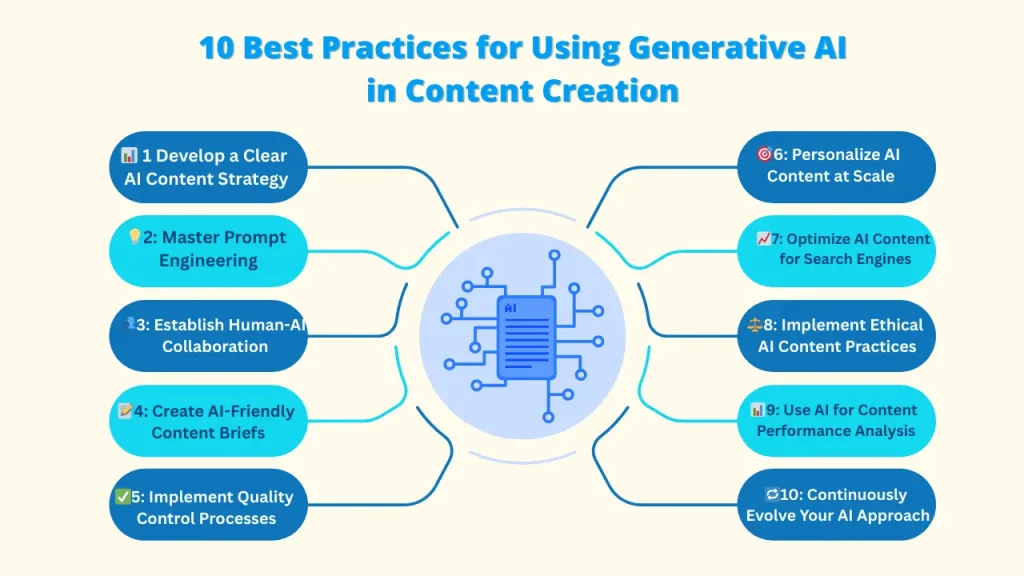
Generative AI for Content Creation: 10 Best Practices
#1: Develop a Clear AI Content Strategy
Before diving into specific tools, establish a strategic framework:
✔ Review current content process: Identify content bottlenecks and high-value opportunities for AI.
✔ Set clear objectives: Define measurable goals for AI implementation (e.g., “increase blog output by 40%”)
✔ Create an integration roadmap: Plan a phased approach rather than overnight transformation
✔ Align with marketing strategy: Ensure AI initiatives support broader marketing objectives.
A well-planned approach helps businesses use generative AI for content creation effectively without wasting time or resources.
#2: Master Prompt Engineering
The way you train the AI frequently determines whether the content is mediocre or outstanding:
✔ Understand prompt fundamentals: Learn the structure of effective instructions
✔ Develop templates: Create ready-to-use prompts for consistent content. Platforms like AI Collective provide optimized prompts for different generative AI models.
✔ Implement advanced techniques: Utilize methods like chain-of-thought prompting to improve reasoning
✔ Build a prompt library: Maintain a collection of proven prompts for common content needs.
Companies that focus on improving AI instructions (prompt engineering) often get better content results.
#3: Establish Human-AI Collaboration
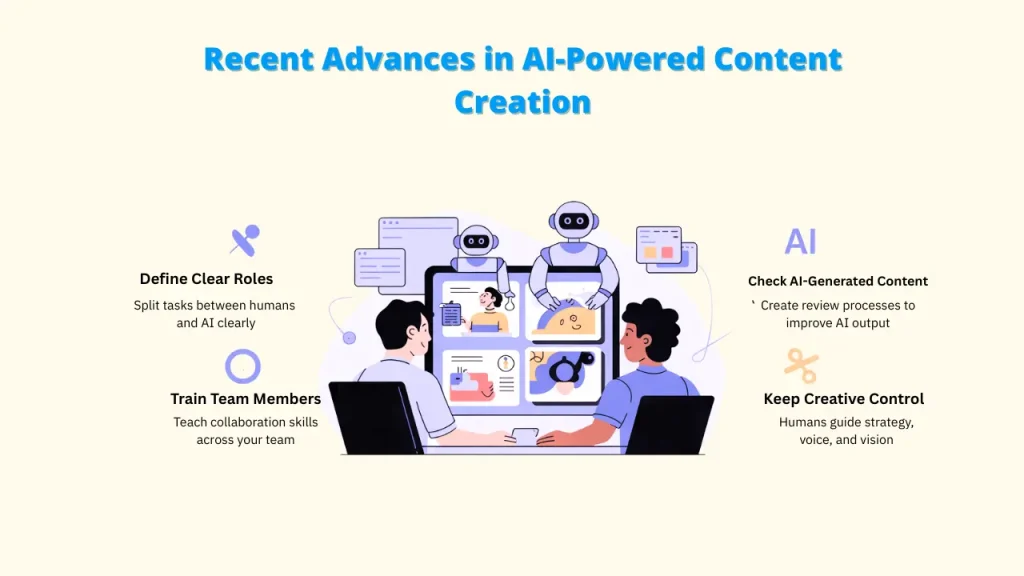
For implementation to be successful, workflows must be created that allow AI and humans to complement one another.
✔ Define clear roles: Find out which parts of content creation are done by humans and which are done by AI.
✔ Check AI-generated content: Create effective procedures for confirming and enhancing AI results.
✔ Train team Members: Develop AI collaboration skills across your content team
✔ Keep creative control: Maintain human control over strategy, voice, and creative vision.
The best approach is to see AI as a helper, not a replacement, combining human creativity with AI’s efficiency.
#4: Create AI-Friendly Content Briefs
Traditional content briefs require evolution for the AI era.
✔ Make it clear: Organize briefs with clear sections that translate well to AI inputs
✔ Give background details: Provide background that helps AI understand the content’s purpose.
✔ Specify brand voice: Give precise voice guidance and illustrations of the desired tone. You can improve your writing style, change the tone of your story, and maintain consistency with the help of AI collective.
✔ Incorporate SEO elements: Seamlessly integrate keyword strategy into AI content creation
Well-written AI briefs significantly improve first-draft quality and shorten editing time.
#5: Implement Quality Control Processes
AI content needs specialized quality assurance:
✔ Fact-checking protocols: Verify all factual claims in AI-generated content.
✔ Use verification tools: Use solutions that can detect potential inaccuracies.
✔ Set AI content rules: Develop editorial standards addressing common AI content issues.
✔ Implement layered review: Design efficient human review processes for different content types.
Businesses that focus on quality control see more trust and engagement from their audience.
#6: Personalize AI Content at Scale
AI’s greatest potential could be in providing truly personalized content experiences:
✔ Segment strategically: Identify audience segments that benefit most from personalization.
✔ Use flexible templates: Develop content frameworks with variable elements for personalization.
✔ Leverage user data: Ethically incorporate available data to enhance relevance. Responsibly use user data to improve relevance. Tools like AI Collective can speed up writing and boost productivity.
✔ Test and optimize: Continuously measure personalization impact on engagement metrics
Companies that personalize generative AI content see 25-40% more audience engagement compared to generic content.
#7: Optimize AI Content for Search Engines
Getting content to rank well on search engines is important:
✔ Use SEO in prompts: Add keywords naturally by including instructions like “optimize for [keyword] while keeping it readable.”
✔ Analyze with SEO tools: Check content with tools like AI Collective, Surfer SEO, or MarketMuse before publishing.
✔ Follow E-E-A-T guidelines: Improve Experience, Expertise, Authority, and Trust by having experts review AI content and add insights.
✔ Balance SEO and readability: Avoid keyword stuffing; make sure AI keeps content engaging and natural.
The best approach is to let AI draft SEO-friendly content while humans refine it for quality.
#8: Implement Ethical AI Content Practices
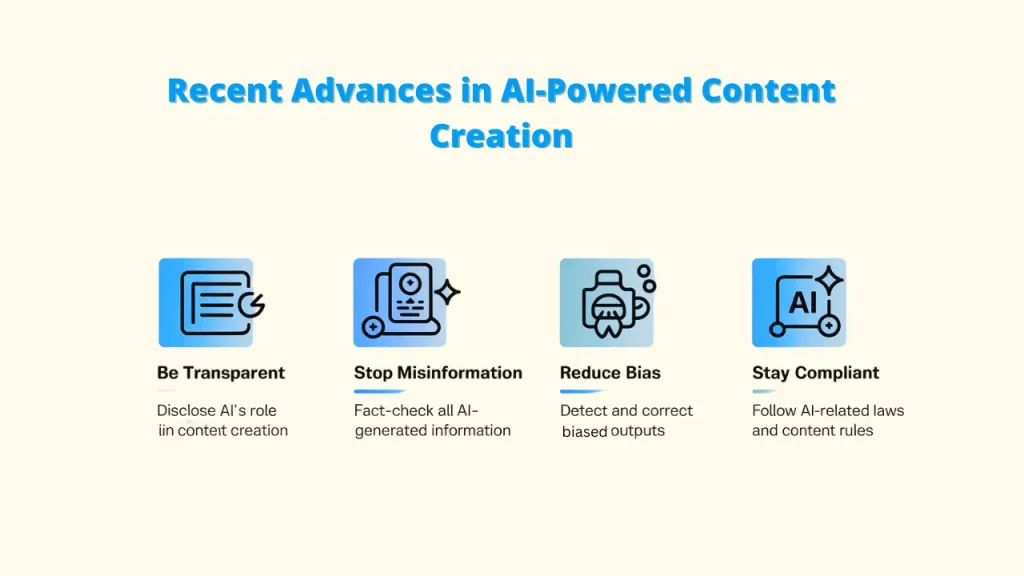
As the prevalence of AI content grows, ethical considerations become increasingly important:
✔ Be transparent: Create contextual guidelines for when and how to disclose AI’s involvement in content creation. Several AI models can be seamlessly interacted with within a single chat interface if you have the right tools, such as AI Collective.
✔ Stop misinformation: Always fact-check AI content, especially for sensitive topics.
✔ Reduce bias: Check AI outputs for cultural, demographic, or ideological biases and adjust prompts to avoid them.
✔ Stay compliant: Keep up with AI-related legal rules and ensure content follows regulations.
Brands that use AI ethically gain more trust and avoid reputational risks.
#9: Use AI for Content Performance Analysis
AI excels not just in creation but in analyzing what works:
✔ Use AI analytics tools: Platforms like HyperWrite Analytics and MarketMuse Performance help measure content success beyond basic stats.
✔ Find patterns in top content: AI can spot trends in your best-performing content, showing what works well across different topics and formats.
✔ Predict future trends: AI can analyze past data to guess which content ideas and formats are likely to perform well in the future.
✔ Automate reports: Set up AI to generate regular performance insights and suggest ways to improve content.
As they continue to improve their strategy based on performance data, teams that use AI for both creation and analysis report a 30–50% increase in content ROI.
#10: Continuously Evolve Your AI Approach
AI is always changing, so businesses need to keep up:
✔ Stay updated on AI tools: Regularly check for new AI features and see how they can improve your content workflow.
✔ Test before using AI fully: Try out new AI tools and techniques in small tests before adding them to your main strategy.
✔ Encourage creativity: Let your team experiment with AI tools without pressure, using platforms like AI Collective to explore new ways to create content.
✔ Create a growth plan: Develop a clear system to track your AI skills and set goals for improving them over time.
Companies that treat AI as a continuous learning process perform better than those that stick to one method and never adjust.
Addressing Common Challenges in Generative AI
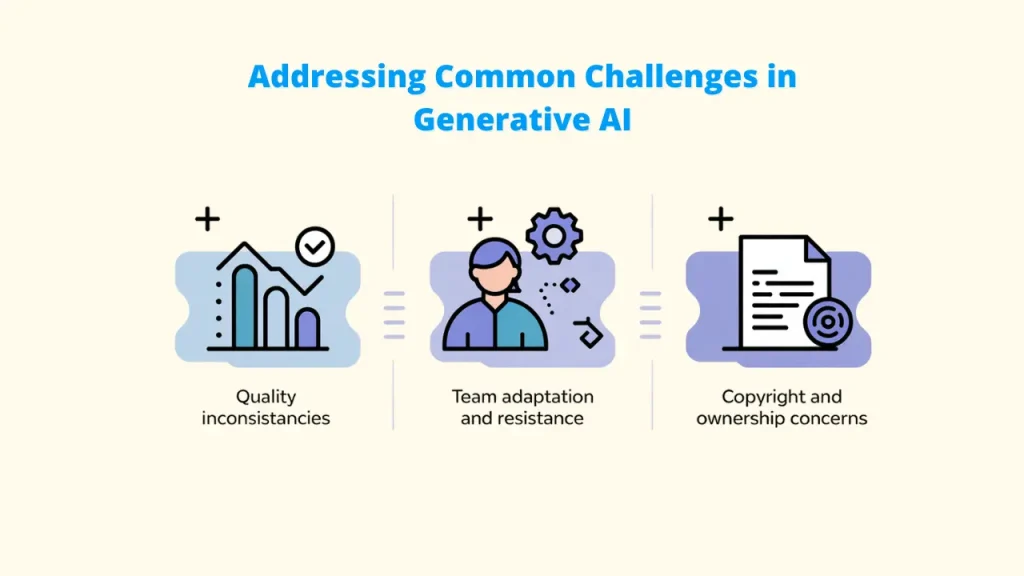
➕Quality Inconsistencies
Combat variable output quality by:
✔ Using clear templates and structured prompts for better results.
✔ Setting up strong review steps for different types of content.
✔ Keeping track of what works best and what doesn’t for your needs.
➕Team Adaptation and Resistance
Overcome implementation challenges by:
✔ Letting team members help pick AI tools and plan workflows.
✔ Offering full training and ongoing support.
✔ Showing how AI can handle boring tasks, giving more time for creativity.
➕Copyright and Ownership Concerns
Navigate legal considerations by:
✔ Staying updated on changing AI rules and platform policies.
✔ Using proper disclosure methods for AI-generated content.
✔ Generating original and unique content by using multiple AI models with AI Collective.
✔ Setting clear company rules on intellectual property and AI-created work.
Future Trends in AI Content Creation
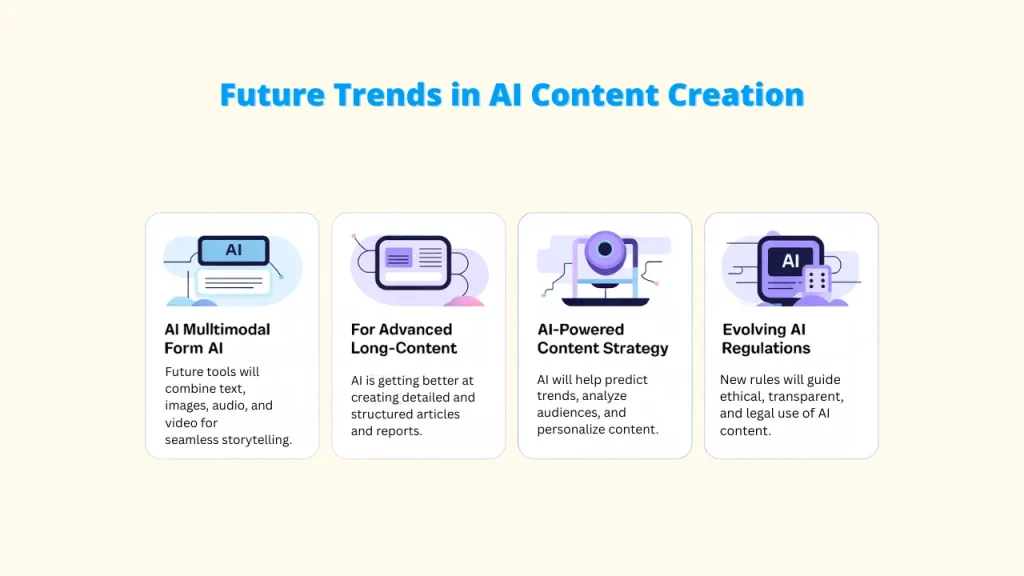
To stay ahead in the evolving AI landscape, keep an eye on these emerging trends:
🚀 Multimodal AI:
The seamless generation of text, images, video, and audio by future tools will allow for more integrated marketing campaigns and storytelling with generative AI.
📖 Advanced Long-Form Content:
AI is becoming more sophisticated in producing detailed, well-structured articles, reports, and even books, improving coherence and depth.
📊 AI-Powered Content Strategy:
AI will not only help with content creation but also predict trends, analyze audiences, and personalize content, making it a valuable tool for marketers. Tools like AI Collective help users create high-quality, diverse content.
⚖️ Evolving AI Regulations:
New guidelines on AI transparency, ethics, and legal use will ensure responsible AI-generated content. Keeping up with these trends will help content creators use AI effectively while staying authentic and following regulations.
Conclusion
Generative AI for content creation has the potential to change the way we write, market, and communicate with audiences. By following smart strategies and best practices, businesses can use AI to improve efficiency, personalize content, and enhance overall impact.
The key to success isn’t just using AI it’s about integrating it wisely. Tools like AI Collective provide powerful content generation while keeping the process simple and user-friendly. However, human creativity and strategic thinking remain essential in crafting truly engaging content.
The best content teams won’t be those that rely entirely on AI, but those that use it thoughtfully within well-structured workflows. AI can handle speed, scale, and data-driven personalization, but humans must guide strategy, creativity, and authenticity.
The future of content belongs to those who embrace AI as a tool without losing the human touch. Will your team be one of them?
FAQs About Generative AI for Content Creation
Q1: Will AI take over content creation jobs?
A: No, AI won’t replace human creators, but it will change their roles. AI is great for automating repetitive tasks, while people bring creativity, strategy, and final quality checks.
Q2: How do I ensure that generative AI content is original and not plagiarized?
A: Use plagiarism detection tools, give AI unique and well-thought-out inputs, and always review the content before publishing. Tools like AI Collective help by combining multiple AI models to create fresh and distinct content.
Q3: How should we inform our audience about AI usage?
A: Transparency builds trust. For some content, like blog posts and articles, disclosing AI involvement can be useful. However, for simpler content like product descriptions, disclosure may not be necessary.
Q4: What skills should content teams learn to work effectively with AI?
A: Prompt engineering, critical editing, strategic thinking, and the ability to steer AI systems toward desired outcomes are becoming increasingly important skills.
Q5: How do small teams with limited resources implement generative AI effectively?
A: Begin with focused use cases that address your biggest pain points, use free or low-cost tools at first, and then scale your approach as you demonstrate ROI.